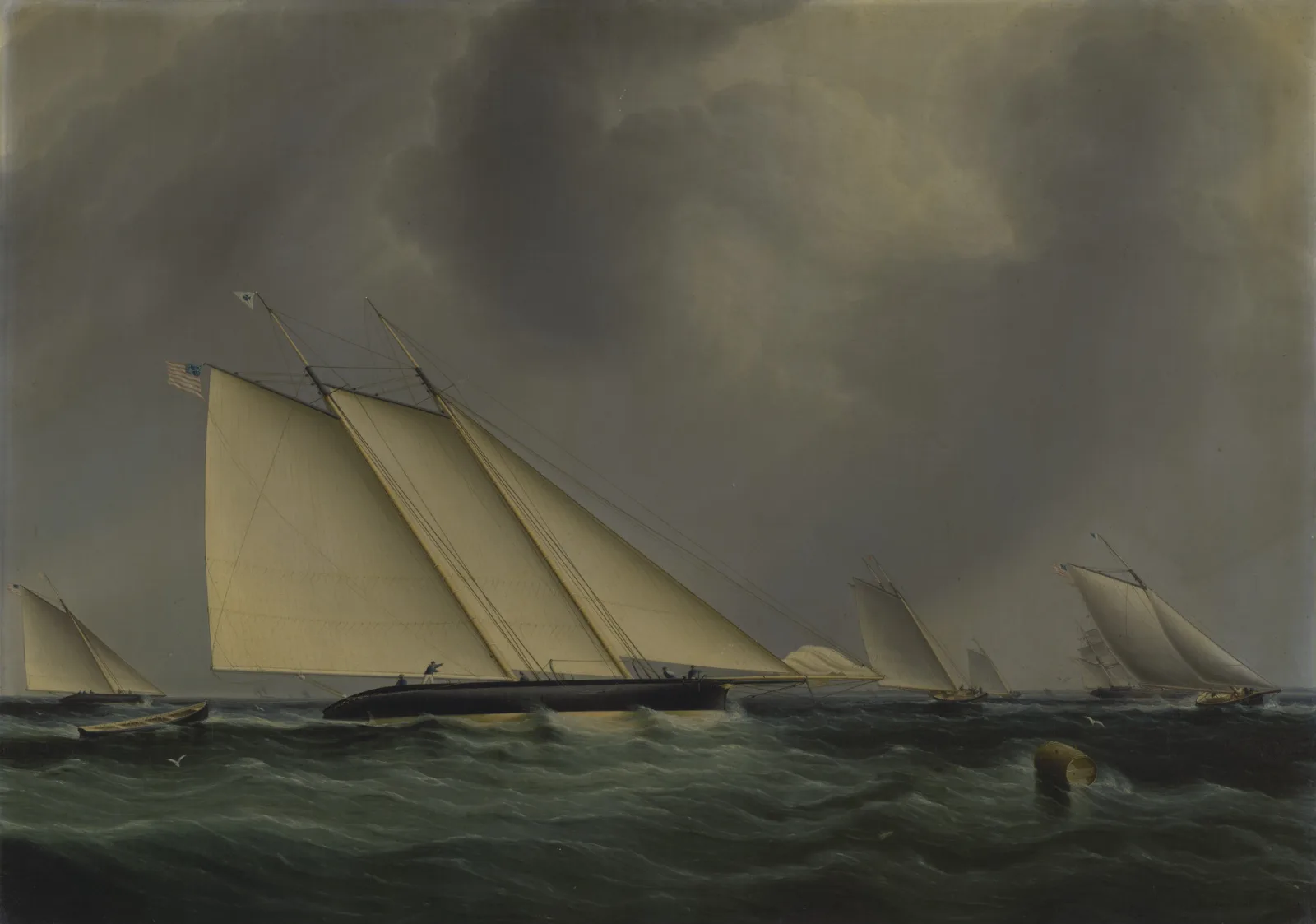
James E. Buttersworth, Yacht Race. Yale Art Gallery. Two boats racing, one behind sailing the leader's race instead of its own.
Clean Air
You tack. They tack. You tack back. They tack back.
The boat behind you is racing you, not the course. It sits in your wake on purpose, matches every move you make, and calls that a strategy.
Staying attached feels safe. As long as the gap doesn't grow, nobody panics. So they hold station in the worst water on the racecourse and delude themselves they're in contention.
That's second place, otherwise known as the first loser. Dead astern of the boat actually making decisions.
The front of the fleet is the only place you've stopped reacting to someone else's decisions. Where you finish is a readout of how much you trust your own eye. Almost nobody gets there, and it's always for the same reason.
What they're sitting in has a name, dirty air.
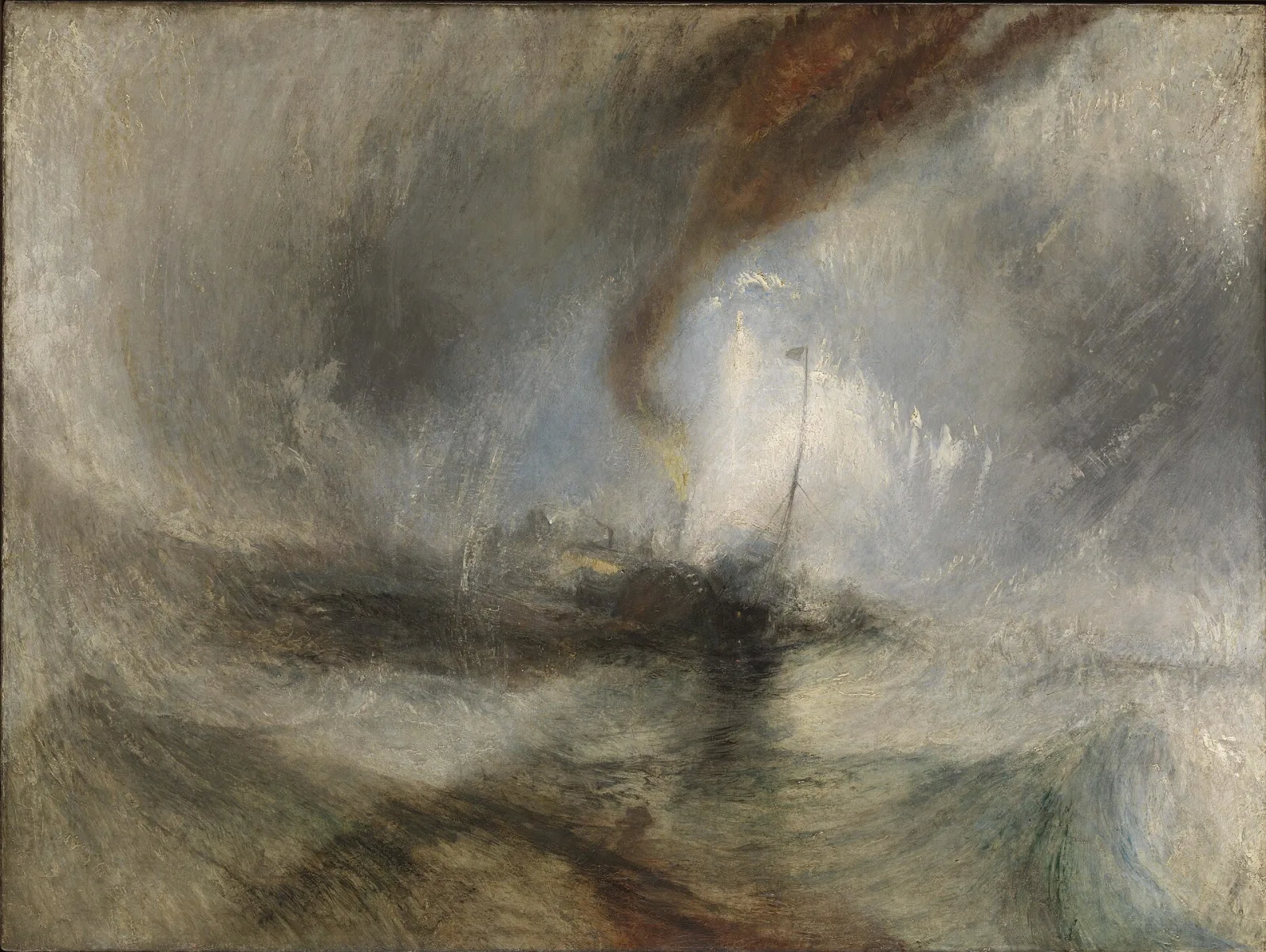
J.M.W. Turner, Snow Storm: Steam-Boat off a Harbour's Mouth (1842). Tate, London. Turbulence you're inside before you can see it.
Dirty air
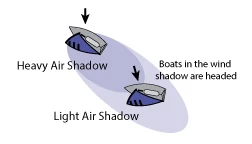
The wind shadow reaches about one mast height to leeward.
A sail is a wing. It works by bending the wind around it, which means every boat drags a wake through the air the same way a hull drags one through the water. Behind the sail the wind comes off slower, twisted, broken into turbulence. Sailors call it dirty air. The lead boat sails in clean, undisturbed wind. Everyone behind sails in the mess shed by the boats ahead, and the further back you are, the dirtier it gets.
The wind shadow reaches about a mast-height to leeward, and a boat caught in it loses height and speed at once. There is nothing the trailing crew can do from in there except get out. The only fix is to change your line.
So the racecourse sorts itself into two jobs. The lead boat makes decisions. Everyone behind metabolizes them. The leader picks a side of the course, reads a shift, commits to a layline, and the fleet downwind of that choice spends the next ten minutes digesting wind that already passed through somebody else's sails.
Copying a competitor is exactly this. You are sailing downwind of someone else's choices and wondering why the air feels thin.
Two sailors
Put two crews on the same start line, same boat, same forecast. Watch what they optimize for.
The Coverer defines the race by the boat ahead. Mirrors every tack, matches every gybe, measures the day in boatlengths gained or lost against one rival. The whole plan is to not lose. Stay close, stay attached, never let the gap open. The Coverer is good, often technically excellent, and spends the entire race in someone else's turbulence because that is where the boat they're watching keeps leading them.
A Coverer gives itself away. It launches after you launch. Its roadmap is your changelog. It describes itself in your coordinates: the X for Y, like X but cheaper, the open-source X. Every move it makes is a response to a move you made first, never an initiation of its own. And it optimizes for parity, drawing even, matching feature for feature, when parity is just the formal name for sitting directly behind you in your wind shadow.
A Coverer will never call itself a copycat; it holds that dissonance at all costs. Underneath the mirroring is a simpler bet, that you will beat yourself. Stay close for enough races and eventually you get careless, or overconfident, or take one split too many, and the Coverer takes the place you dropped. It is a wager on your stumble, collected over a season of averages, and its fuel is pride, not learning: the aim is to impress the boat out front, never to become it.
The Liner commits to their own read of the wind. Sees pressure building on the left, or a shift coming down the right, and sails toward it even when it means splitting from the fleet and crossing a stretch of course alone with no one to check their work against. The Liner is willing to be wrong, publicly, in front of everyone, on a call nobody else made. That willingness is the price of clean air. There is no version where you get the undisturbed wind and the safety of the pack at the same time.
None of this makes the Coverer a weak competitor. Covering is a coherent, defensible, often beautifully executed plan. It just happens to be a plan whose best possible finish is second.
The Coverer is racing a boat. The Liner is racing the wind. Only one of those is the actual course.
Why anyone chooses the dirty air
Fear, mostly. Covering is the safe bet, and it's safe in a specific, seductive way.
If you mirror the leader, you cannot lose by much. Whatever shift comes through hits both of you at once. Whatever mistake the leader makes, you inherit a softened version. You give up the disaster scenarios and the gap stays bounded. For a crew that has decided the worst outcome is embarrassment, that's a rational trade.
It also forecloses winning. You cannot pass a boat by following it through the same air, and the only way to the front is water they aren't sailing, where your line might be wrong and you might round the mark last with everyone watching. Covering buys you safety with the one currency that could have bought you the race.
Second place is the prize for being more afraid of looking wrong than of finishing behind.
I've sailed races from inside that bad air. Plenty of them. Covering is the move you reach for when you've quietly stopped trusting your own read of the wind, and I know how clean the rationalization feels from the inside. The pull is real. It feels like discipline. Most of the time it's fear with better posture.
Let it crash
I write fault-tolerant systems for a living, and the sailing logic is the same logic.
The follower codes defensively. Wraps every call in a try, swallows every error, builds elaborate machinery to make sure the process can never, ever fall over. The whole design goal is to never capsize.
A system built to never capsize has decided never to win.
The runtime I build on, the BEAM that Erlang and Elixir run on, makes the opposite bet. It does not try to prevent failure. It isolates failure and restarts from it. A process takes an aggressive line, gets it wrong, crashes, and the supervisor brings it back from last known good state while everything around it keeps running. That is the bet behind "let it crash." A system willing to fail cleanly and recover stays available longer than one contorted into never failing at all.
Sailing the boat at the limit is the same move. You push for every tenth of boatspeed, hike until it hurts, and sometimes a puff puts you over. The capsize is the cost of sailing at the edge, not of sailing away from the crowd. A did-not-finish you learned something from beats a podium you covered your way onto. The supervisor rights the boat and puts you back on your own line.
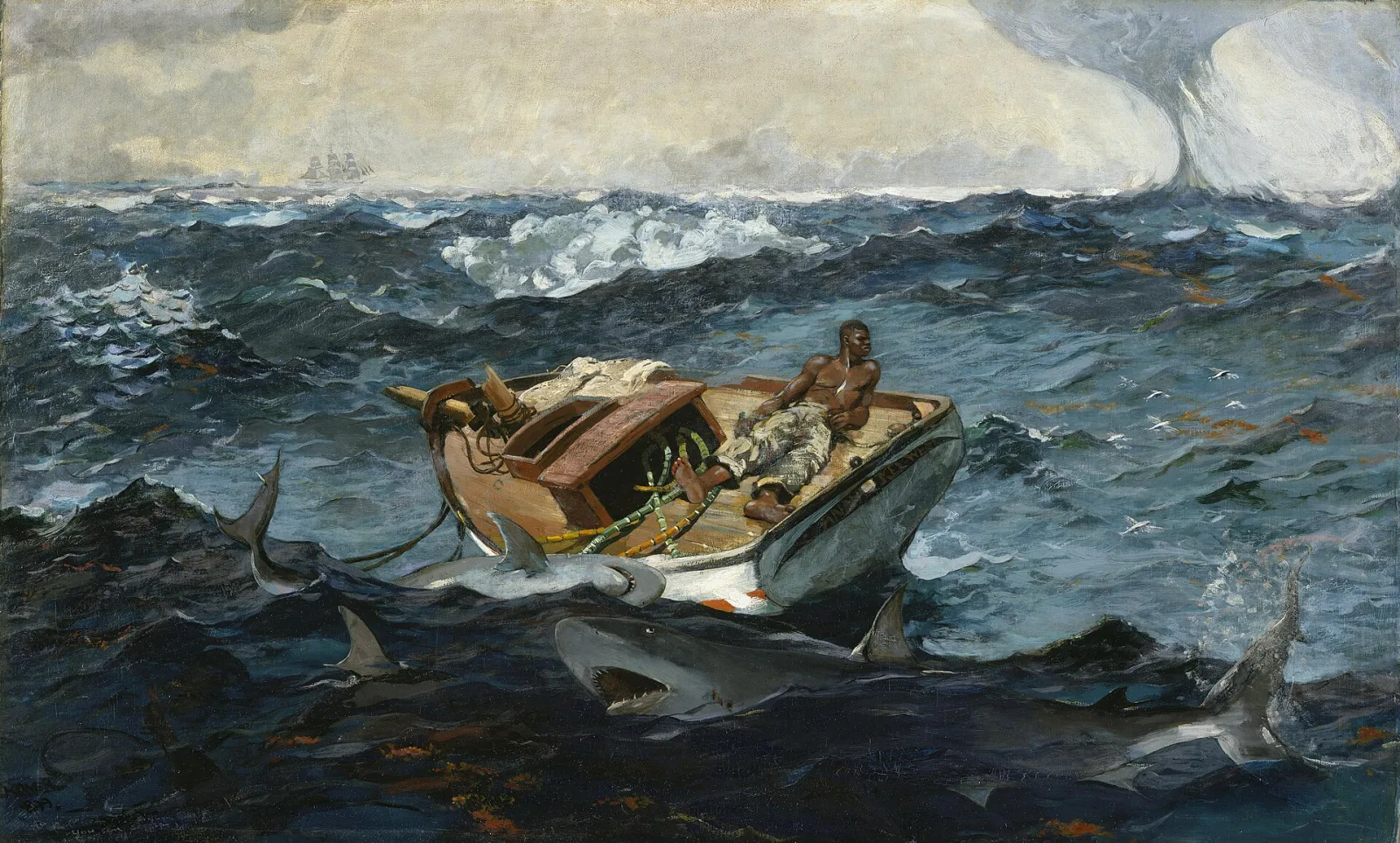
Winslow Homer, The Gulf Stream (1906). Metropolitan Museum of Art. The mast is gone and the water is coming in. Look at the horizon. There's a ship. The supervisor is already on its way.
First versus third
All of that is about nerve. Willing to split, willing to be wrong, willing to go over. But nerve pointed at nothing is how you finish dead last, and I've done exactly that.
The thing that actually separates first from third is quieter. Speed is not the difference. Second and third are often faster than first, better trimmed and drilled, quicker in a straight line. They lose anyway. The difference is feel, the one thing on a racecourse you can't read off an instrument.
You read the wind the way a musician hears a key change, a beat before it arrives. A trained eye catches a shift coming across the water from half a mile out: a darker fan of ripple, a band of pressure leaning the boats ahead onto a new angle.
Which is also why banging a corner is usually a mistake. You do not win by fleeing to the edge of the course and praying. You win by playing the shifts you can actually read, taking the lifts, ducking the headers, and working back toward the middle so the next shift still counts. Conviction without a read is just gambling. A read you are too afraid to act on is just covering. First place is the rare boat that has both: it sees the wind, and it trusts what it sees enough to commit.
I won the Michelob Ultra Cup on the Neuse River doing exactly this. It is a long, straight run, and as the day cools you get two breezes, a land breeze and a sea breeze, driven by the difference in specific gravity between the air over the land and the air over the water. Each one fills particular patches of the course at particular times. We had gone and learned the river. The asphalt strung along it bakes all day, the tarmac at Cherry Point, the lots at the Seagull and Seafarer camps, and once the temperature drops it sheds that heat faster than the water around it, throwing off pockets of wind you can leapfrog between if you know when they break. So we sailed the lots, not the fleet. The boats covering us trailed into our wake and inherited our position without our reasons; every pocket we hopped, they arrived a beat late, missed the shift, mistimed the puff. They finished near the back, and they never understood the bet, because the bet was made of something they had refused to go learn.
Third reacts to second, who reacts to first. Every position back is one more boat that chose to watch the leader instead of the water.
Neither blind nor first
You read the other boats constantly. You just don't let them set your line. The Liner knows exactly where every competitor is and chooses the wind anyway. Information about the fleet is input. It is never the instruction.
Clean air has nothing to do with being chronologically first. Plenty of boats start early and spend the whole race covering. Being first off the line and then sailing reactively is just getting to second place sooner. Clean air is being first to commit to an original line, whenever you commit to it.
Find your line
Find your line. Take the split. Sail in clean air even when it means breaking from the fleet on a shift only you have read, even when the wind betrays you and you round the mark dead last with no one to blame but your own eye. The gun has already gone. The only question left is whose air you're sailing in.
We just put a Raxol agent on Virtuals. It owns its keys, moves under a mandate a human signed, and settles privately through Xochi. Most of agent commerce right now runs on a Python script with a thread lock and a prayer, and the reflex is to cover whoever's ahead. We built ours on the BEAM and shipped it where the air was clean. It might not pay. That is the cost of sailing your own read, and we take it, because we optimize for learning first and contribution second, in that order. Nothing else compounds.
What you'd build with no one watching, after the applause stops, is the only line worth sailing.
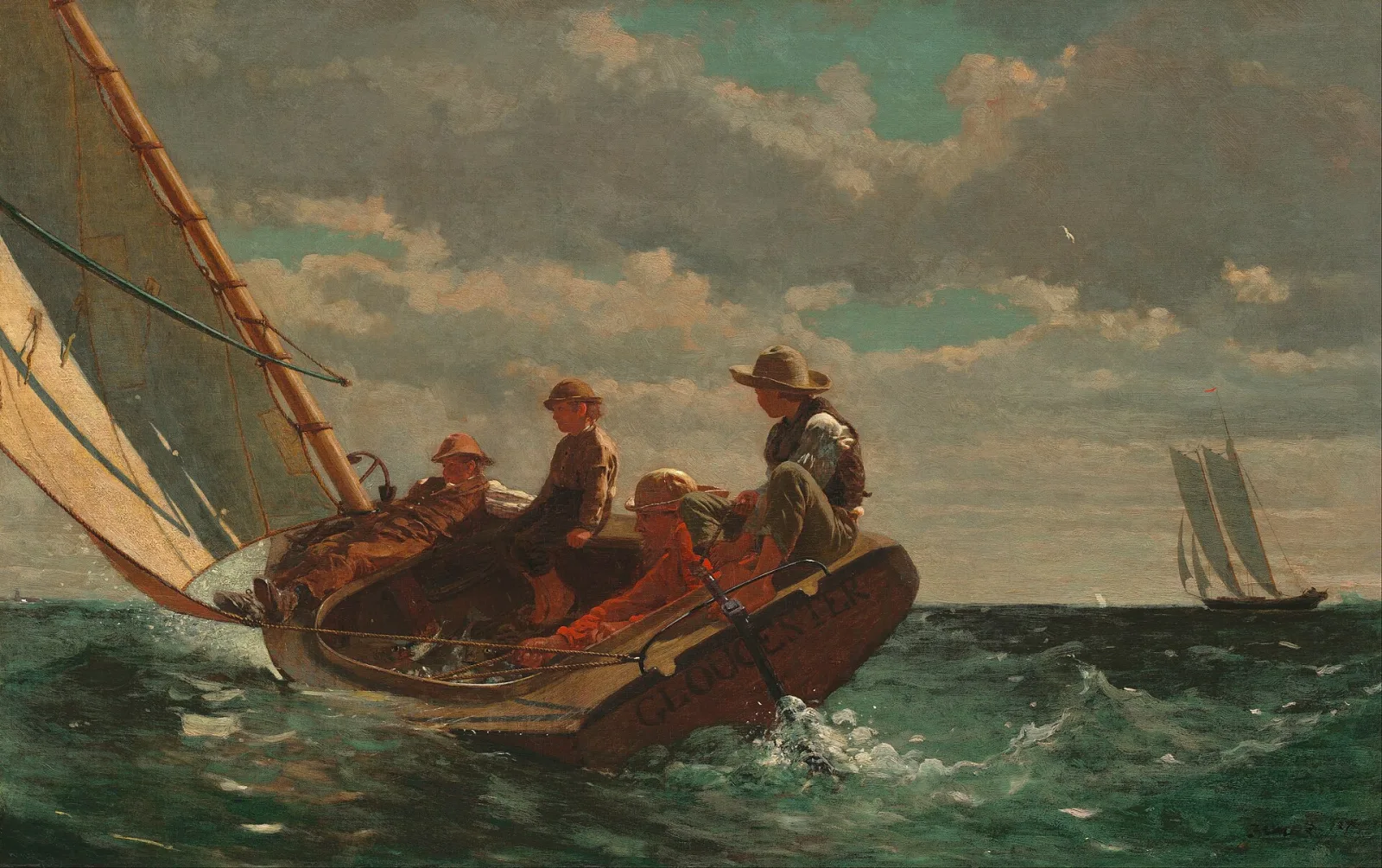
Winslow Homer, Breezing Up (A Fair Wind) (1876). National Gallery of Art. Heeled over, everyone hiked out, the mast cropped off the top of the frame. All of it pointed forward.
Raxol is an OTP-native multi-surface runtime for Elixir. GitHub. The agent runs on Virtuals, the payment rails through Xochi, and the open infrastructure through axol.io. Fund the lab on Giveth.